Sunday, February 28, 2010

Starring a Text: Neuromancer

Welcome to my starring of a text! I do my close-reading in the style of a traditional blog: that is, my postings are chronological. Use the [NEXT] link on the bottom of each post to navigate the postings - each post corresponds to a segment of analysis of a code or pair of codes from a segment of the chosen passage. Or use this post as a guide through my analysis, starting here, and moving through:

Approach -> Part 1 -> Part 2 -> Part 3 -> Part 4 -> Part 5 -> Part 6 -> Part 7

Or explore it in your own order.

Part 7

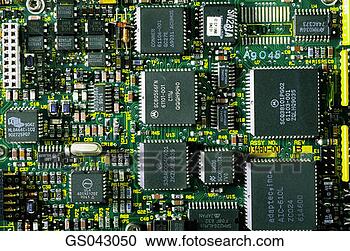
"The pattern might have represented microcircuits, or a city map -"


[HER, SYM]

The scrap of printed silk in Linda Lee's hair serves as a representation or symbol for something: but what? Does it symbolize technology, or the urban environment? The pattern is ambiguous. The way in which Case confuses the microcircuit with the layout of a city (the two do look strikingly similar) sets up a blurry boundary between technology and the actual geographic entity of a city. This confusion asks the question: where, in Case's universe, falls the distinction between cyberspace and actual space? Which is the "truer" space?
This is a question which is never fully resolved but is rather extensively explored in the rest of the novel though Gibson's descriptions of Case's experiences within cyberspace and through rhetorical twists like "city of data" (Gibson, 248). In this way, the printed silk is simultaneously a symbolic and a hermeneutic code - symbolizing an enigma.

Part 6


"Her dark hair was drawn back, held by a band of printed silk -"

[REF]

Here, the combination of references to "dark hair" and "printed silk" bring the racialized portrayal of Linda Lee into full focus. Both phrases are understood by the reader as signifiers of Lee's "Asianness," and the appropriation of Asian cultural elements is one of the aspects that most definitively characterizes the world created by Gibson, as explored in a more limited sense in Part 4. Gibson's use of Orientalism transcends the traditional definition of the term in the sense that he actually writes about Asian characters in an Asian geographic location, rather than just using cultural aspects of Asian culture in his work. However, given that the primary characters are mostly white and his work seems more to use Asian characters as a reinforcement and legitimization of the cultural tokens he weaves into his aesthetic, Orientalism is still a characteristic feature of his work.

[NEXT]

Part 5

"New lines of pain were starting to etch themselves permanently at the corners of her mouth -"

[ACT: 1: etch]

We usually say that wrinkles "appear;" popular anti-aging creams claim to minimize "fine lines." But the lines on Linda Lee's face are "lines of pain" which are not simply appearing out of nowhere - they "etch themselves" onto her face. This action of "etching" evokes scratching, cutting and carving. These actions, far more than "appearing," connote violence and permanence. This description is very much in line with the previous passage - the association of decay and destruction with the beauty and youth that otherwise characterize Linda Lee. They reinforce the disturbing connection between the seemingly oppositional elements, and add to the general tone of grunge and perverted nature that characterize the world of "Neuromancer."

This passage is also resonant with the description of the cafe in which the scene takes place, a cafe in which the "brown laminate of the tabletop was dull with a patina of tiny scratches... [Case] saw the countless random impacts required to create a surface like that... leaving each surface fogged with something that could never be wiped away " (Gibson, 9). Like the surface of the object in the cafe itself, "random impacts" and "attacks" have worked on Linda Lee to leave scratches and lines in her face that "could never be wiped away."

[NEXT]

Part 4

"The skin below her eyes was pale and unhealthy-looking, but the flesh was still smooth and firm. She was twenty -"

[SEM]


This description simultaneously evokes youth - "smooth," "firm," - and decay - "pale," "unhealthy-looking." While these meanings are usually at odds with each other, Gibson unites the two in the same way that he brings together seemingly disparate aesthetics throughout the rest of the novel - like technology and grime or futuristic elements and orientalism. The very cafe in which the events of this passage are contextualized is decorated in "an uneasy blend of Japanese traditional and pale Milanese plastics" (Gibson, 9). Gibson continually juxtaposes visual semantic codes which come together in an uneasy or unintuitive way as a means to lend his world a simultaneously new and eerily familiar feeling.


[NEXT]

Part 3

"Her accent put her south along the Sprawl, in Atlanta -"

[REF, HER]

In this case, rather than making a cultural reference to something purely invented by Gibson and placed in the context of Gibson's invented cyberpunk universe, Gibson references the Southern accent common to a real American city - Atlanta, Georgia, although the mystery remains whether this accent is anything like an American Southern accent, or what it means to live "south along the Sprawl." In this way, Gibson both grounds the text in our existing cultural context, but does not truly answer the question of whether this cultural context is really a valid comparison within the world of "Neuromancer."

[NEXT]

Part 2

"He took it, let her light it with a red plastic tube. "You sleepin' okay, Case? You look tired -"

[SEM, ACT]

No particular word, but the sequence of actions in this passage evoke motherhood. Linda Lee gives [ACT: 1: giving] a cigarette to Case, lights it for him [ACT: 2: helping], and then asks him a very motherly question [ACT: 3: inquiring]. This sequence of actions does not denote motherhood - Linda Lee is not Case's mother. However, the connotation of the sequence seems to put Linda Lee in the role of Case's mother, and evokes for Case himself "the smell of her skin in the overheated darkness of a coffin near the port, her fingers locked across the small of his back" (Gibson, 9) which, in turn, seems to evoke the womb.

[NEXT]

Part 1

"She dug a pack of Yehuyuan filters from an ankle pocket -"

[HER, REF]

On first reading, the Yeheyuan filter and the ankle pocket are referential codes - cultural references that the reader can pick up on and interpret in line with his or her cultural life experiences. But the culture William Gibson is writing about is nowhere to be found on planet Earth. No reader of Neuromancer will instinctively recognize the "Yeheyuan filter" or even the "ankle pocket." Gibson makes these two references clear enough that we may interpret them and move on with the story, but, while they seem to read as cultural references at a structural level, they also pose a question and constitute, in a sense, an enigma: in that way, cultural references in "Neuromancer" serve both as referential and hermeneutic codes.

[NEXT]

Approach

"The work of the commentary, once it is separated from any ideology of totality, consists precisely in manhandling the text, interrupting

it."

(Roland Barthes, S/Z, 15)

My approach to this text is to divide the passage into a number of lexias, which I analyze Barthes-style in each separate post. My departure from Barthes' method is notable in Parts 1, 2, 3 and 7. In these posts, I identify two interacting codes, and explain how I feel a certain phrase or sentence works within more than one of the five code categories. I "interrupt" my lexias in order to put forward my analysis.

[NEXT]

The Chosen Passage


"She dug a pack of Yeheyuan filters from an ankle pocket. He took it, let her light it with a red plastic tube. “You sleepin’ okay, Case? You look tired.” Her accent put her south along the sprawl, toward Atlanta. The skin below her eyes was pale and unhealthy-looking, but the flesh was still smooth and firm. She was twenty. New lines of pain were starting to etch themselves permanently at the corners of her mouth. Her dark hair was drawn back, held by a band of printed silk. The pattern might have represented microcircuits, or a city map."

(William Gibson, "Neuromancer," page 9)

Re-read?


Why this passage?

I chose a short passage in accordance with Barthes' rejection of "structuring [the] text in large masses (11), and I feel that this particular passage contains a range of lexias which encompass a variety of codes and interactions between codes. Each part, 1 through 7, of this blog covers a separate lexia, with the relevant code or codes indicated underneath the passage fragment in square brackets.

[NEXT]