Boyd’s, Dibbell’s, Manovich’s and Burgin’s texts all argue for the Internet (or new media more generally) as a special type of space. Choosing the one you find most compelling, explain their conceptualization of online space and what’s at stake in it. To address why you find this concept persuasive, relate it to either one media object studied thus far (Douglas Engelbart’s Demo, Liz Canner’s Symphony of the City, Second Life, Time Code, the CAVE) or an example from the current new media landscape. In your analysis, explain how your media object both exemplifies and complicates this argument.
Julian Dibbell grounds his analysis of Internet space, rape and the gendered body within the Multi-User Dimension (MUD) called LambdaMOO. Dibbell himself experiences LambdaMOO as a space in a very literal way - he writes movingly about Lambda’s “rambling landscapes” (7) and the way that words in the chat room can “fill up the screen like thick cigar smoke” (21). When confronted with the physical reality of the computer that contains and maintains LambdaMOO, all Dibbell can think of is “how impossible it was to ever quite believe the place was not, in fact, a place… he could never quite shake the sense that LambdaMOO existed somewhere in a concrete sense… an X on the map of the material world” (7). LambdaMOO is actually composed of a series of virtual “rooms” defined only by textual descriptions and a limited set of programmed interactions, but Dibbell makes it clear from the start that LambdaMOO is to be conceived of as a very real space in the minds of its user community. One of Dibbell’s main analytical focuses is on the possibilities of the space to free users from the physical conventions of the “real,” physical world and the constraints of the human body - a focus that can be brought to bear meaningfully on the more technically-complex MUD that is Second Life.
Users of LambdaMOO define themselves however they want, by writing a short description of the appearance of their avatar. There are no limits on how a user can approach this description - Dibbell himself sometimes appeared as a dolphin. This freedom presents a proliferation of possibilities, which appeal to Dibbell as a challenge to transcend our real-world physical bodies. LambdaMOO, he writes, “asks us to behold the new bodies awaiting us in virtual space undazzled by their phantom powers, and to get to the crucial work of sorting out the socially meaningful differences between those bodies and our physical ones” (12). One of the socially meaningful differences between the virtual body and the physical one is that the virtual body need not necessarily be gendered in the conventional sense - characters have no sex, so the social requirement for gender is naturally somewhat loosened in LambdaMOO. One user, taking advantage of this freedom, crafted her character accordingly: a “South American trickster spirit of indeterminate gender” named exu (13). However, the total freedom afforded to Lambda users began to reveal its dark side when a rogue user, Mr_Bungle, exploited the system to orchestrate the virtual rape of two other users, including exu. Ironically, although the liberties of LambdaMOO afforded exu “a deity’s freedom from the burdens of the gendered flesh,” they ultimately led to her painful experience with “a brand of degradation all-too-customarily reserved for the embodied female” (15).
exu’s feelings of violation and of outrage may seem strange to those unfamiliar with the emotional power and realness of a virtual community - no physical contact was made, no law was technically violated. However, it is telling that the rest of the LambdaMOO community responded with strong emotion and the united conviction that the actions of Mr_Bungle represented a serious transgression against the community as a whole. This can best be accounted for by the redefinition of sex that is necessary to comprehend its role on the Internet. As Dibbell writes, “sex is never so much an exchange of fluids as it is an exchange of signs” (17). Sex, in the physical as well as the virtual world, is highly symbolic: this explains the ease and speed with which it has become a staple of online life. The woman who created exu was forced to respond to the rape both for herself and for exu - that is to say, in the contexts of both the real and the virtual world. Her response, Dibbell writes, “made sense only in the buzzing, dissonant gap between them” (16).
Today, the average Internet user is more likely to gravitate toward the immensely popular Second Life than to visit a text-based MUD like LambdaMOO. The experience of playing Second Life is more appealingly visual and more interactive than the somewhat outdated LambdaMOO experience. In some ways, the freedom and possibilities of LambdaMOO are enriched greatly in Second Life. Users can customize their appearance by actually altering or constructing a very sophisticated virtual avatar. The possibilities seem endless - skin color, hair color, size, shape, clothing - there are uncountable options for each. And virtual sex is commonplace, not only in terms of text exchanges between users - Second Life allows characters to use their computer microphones, and some technically ambitious Second Lifers have actually crafted “pose-balls” that allow two avatars to visually mime the act of sex. These incredible options make the embodiment of gender and sexuality in Second Life seem vastly more freeing than within the stale chat room aesthetic of LambdaMOO.
However, the increased complexity of the program does not come without a cost. In the interest, presumably, of making better avatars, Second Life forces you to choose a gender at sign-up. The enforcement of this binary restricts the freedom to transcend the physical body - a character like exu simply would not be fully possible in Second Life. When it comes to the actual act of engaging in sex with another character in Second Life, the sexual “pose-balls” may make it look real, but they are structured to be somewhat limiting - they are often actually pink- or blue-colored based on the gender of the character who is meant to use them. While the bizarre sexual antics of Mr_Bungle may have been offensive and harmful, they certainly pushed the boundaries of the heteronormative vision of “proper sex,” which is more enforced by the pink and blue balls than it is challenged. Second Life is an interesting sphere in which to study the continuation of new forms of liberty in cyberspace, but its increased technical sophistication does not necessarily produce an increase in real freedom.
Thursday, March 25, 2010

Sunday, February 28, 2010
Starring a Text: Neuromancer
Welcome to my starring of a text! I do my close-reading in the style of a traditional blog: that is, my postings are chronological. Use the [NEXT] link on the bottom of each post to navigate the postings - each post corresponds to a segment of analysis of a code or pair of codes from a segment of the chosen passage. Or use this post as a guide through my analysis, starting here, and moving through:
Approach -> Part 1 -> Part 2 -> Part 3 -> Part 4 -> Part 5 -> Part 6 -> Part 7
Or explore it in your own order.

Approach -> Part 1 -> Part 2 -> Part 3 -> Part 4 -> Part 5 -> Part 6 -> Part 7
Or explore it in your own order.

Part 7
"The pattern might have represented microcircuits, or a city map -"
[HER, SYM]
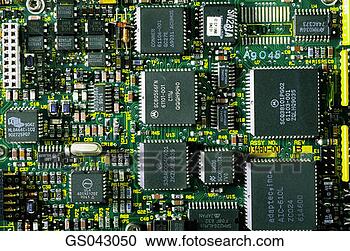
The scrap of printed silk in Linda Lee's hair serves as a representation or symbol for something: but what? Does it symbolize technology, or the urban environment? The pattern is ambiguous. The way in which Case confuses the microcircuit with the layout of a city (the two do look strikingly similar) sets up a blurry boundary between technology and the actual geographic entity of a city. This confusion asks the question: where, in Case's universe, falls the distinction between cyberspace and actual space? Which is the "truer" space?
This is a question which is never fully resolved but is rather extensively explored in the rest of the novel though Gibson's descriptions of Case's experiences within cyberspace and through rhetorical twists like "city of data" (Gibson, 248). In this way, the printed silk is simultaneously a symbolic and a hermeneutic code - symbolizing an enigma.
[HER, SYM]

The scrap of printed silk in Linda Lee's hair serves as a representation or symbol for something: but what? Does it symbolize technology, or the urban environment? The pattern is ambiguous. The way in which Case confuses the microcircuit with the layout of a city (the two do look strikingly similar) sets up a blurry boundary between technology and the actual geographic entity of a city. This confusion asks the question: where, in Case's universe, falls the distinction between cyberspace and actual space? Which is the "truer" space?
This is a question which is never fully resolved but is rather extensively explored in the rest of the novel though Gibson's descriptions of Case's experiences within cyberspace and through rhetorical twists like "city of data" (Gibson, 248). In this way, the printed silk is simultaneously a symbolic and a hermeneutic code - symbolizing an enigma.
Part 6

"Her dark hair was drawn back, held by a band of printed silk -"
[REF]
Here, the combination of references to "dark hair" and "printed silk" bring the racialized portrayal of Linda Lee into full focus. Both phrases are understood by the reader as signifiers of Lee's "Asianness," and the appropriation of Asian cultural elements is one of the aspects that most definitively characterizes the world created by Gibson, as explored in a more limited sense in Part 4. Gibson's use of Orientalism transcends the traditional definition of the term in the sense that he actually writes about Asian characters in an Asian geographic location, rather than just using cultural aspects of Asian culture in his work. However, given that the primary characters are mostly white and his work seems more to use Asian characters as a reinforcement and legitimization of the cultural tokens he weaves into his aesthetic, Orientalism is still a characteristic feature of his work.
[NEXT]
Part 5
"New lines of pain were starting to etch themselves permanently at the corners of her mouth -"
[ACT: 1: etch]
We usually say that wrinkles "appear;" popular anti-aging creams claim to minimize "fine lines." But the lines on Linda Lee's face are "lines of pain" which are not simply appearing out of nowhere - they "etch themselves" onto her face. This action of "etching" evokes scratching, cutting and carving. These actions, far more than "appearing," connote violence and permanence. This description is very much in line with the previous passage - the association of decay and destruction with the beauty and youth that otherwise characterize Linda Lee. They reinforce the disturbing connection between the seemingly oppositional elements, and add to the general tone of grunge and perverted nature that characterize the world of "Neuromancer."
This passage is also resonant with the description of the cafe in which the scene takes place, a cafe in which the "brown laminate of the tabletop was dull with a patina of tiny scratches... [Case] saw the countless random impacts required to create a surface like that... leaving each surface fogged with something that could never be wiped away " (Gibson, 9). Like the surface of the object in the cafe itself, "random impacts" and "attacks" have worked on Linda Lee to leave scratches and lines in her face that "could never be wiped away."
[NEXT]
[ACT: 1: etch]
We usually say that wrinkles "appear;" popular anti-aging creams claim to minimize "fine lines." But the lines on Linda Lee's face are "lines of pain" which are not simply appearing out of nowhere - they "etch themselves" onto her face. This action of "etching" evokes scratching, cutting and carving. These actions, far more than "appearing," connote violence and permanence. This description is very much in line with the previous passage - the association of decay and destruction with the beauty and youth that otherwise characterize Linda Lee. They reinforce the disturbing connection between the seemingly oppositional elements, and add to the general tone of grunge and perverted nature that characterize the world of "Neuromancer."
This passage is also resonant with the description of the cafe in which the scene takes place, a cafe in which the "brown laminate of the tabletop was dull with a patina of tiny scratches... [Case] saw the countless random impacts required to create a surface like that... leaving each surface fogged with something that could never be wiped away " (Gibson, 9). Like the surface of the object in the cafe itself, "random impacts" and "attacks" have worked on Linda Lee to leave scratches and lines in her face that "could never be wiped away."
[NEXT]
Part 4
"The skin below her eyes was pale and unhealthy-looking, but the flesh was still smooth and firm. She was twenty -"
[SEM]

This description simultaneously evokes youth - "smooth," "firm," - and decay - "pale," "unhealthy-looking." While these meanings are usually at odds with each other, Gibson unites the two in the same way that he brings together seemingly disparate aesthetics throughout the rest of the novel - like technology and grime or futuristic elements and orientalism. The very cafe in which the events of this passage are contextualized is decorated in "an uneasy blend of Japanese traditional and pale Milanese plastics" (Gibson, 9). Gibson continually juxtaposes visual semantic codes which come together in an uneasy or unintuitive way as a means to lend his world a simultaneously new and eerily familiar feeling.
[NEXT]
[SEM]

This description simultaneously evokes youth - "smooth," "firm," - and decay - "pale," "unhealthy-looking." While these meanings are usually at odds with each other, Gibson unites the two in the same way that he brings together seemingly disparate aesthetics throughout the rest of the novel - like technology and grime or futuristic elements and orientalism. The very cafe in which the events of this passage are contextualized is decorated in "an uneasy blend of Japanese traditional and pale Milanese plastics" (Gibson, 9). Gibson continually juxtaposes visual semantic codes which come together in an uneasy or unintuitive way as a means to lend his
 world a simultaneously new and eerily familiar feeling.
[NEXT]
Part 3
"Her accent put her south along the Sprawl, in Atlanta -"
[REF, HER]
In this case, rather than making a cultural reference to something purely invented by Gibson and placed in the context of Gibson's invented cyberpunk universe, Gibson references the Southern accent common to a real American city - Atlanta, Georgia, although the mystery remains whether this accent is anything like an American Southern accent, or what it means to live "south along the Sprawl." In this way, Gibson both grounds the text in our existing cultural context, but does not truly answer the question of whether this cultural context is really a valid comparison within the world of "Neuromancer."
[NEXT]
[REF, HER]
In this case, rather than making a cultural reference to something purely invented by Gibson and placed in the context of Gibson's invented cyberpunk universe, Gibson references the Southern accent common to a real American city - Atlanta, Georgia, although the mystery remains whether this accent is anything like an American Southern accent, or what it means to live "south along the Sprawl." In this way, Gibson both grounds the text in our existing cultural context, but does not truly answer the question of whether this cultural context is really a valid comparison within the world of "Neuromancer."
[NEXT]
Part 2
"He took it, let her light it with a red plastic tube. "You sleepin' okay, Case? You look tired -"
[SEM, ACT]
No particular word, but the sequence of actions in this passage evoke motherhood. Linda Lee gives [ACT: 1: giving] a cigarette to Case, lights it for him [ACT: 2: helping], and then asks him a very motherly question [ACT: 3: inquiring]. This sequence of actions does not denote motherhood - Linda Lee is not Case's mother. However, the connotation of the sequence seems to put Linda Lee in the role of Case's mother, and evokes for Case himself "the smell of her skin in the overheated darkness of a coffin near the port, her fingers locked across the small of his back" (Gibson, 9) which, in turn, seems to evoke the womb.
[NEXT]
[SEM, ACT]
No particular word, but the sequence of actions in this passage evoke motherhood. Linda Lee gives [ACT: 1: giving] a cigarette to Case, lights it for him [ACT: 2: helping], and then asks him a very motherly question [ACT: 3: inquiring]. This sequence of actions does not denote motherhood - Linda Lee is not Case's mother. However, the connotation of the sequence seems to put Linda Lee in the role of Case's mother, and evokes for Case himself "the smell of her skin in the overheated darkness of a coffin near the port, her fingers locked across the small of his back" (Gibson, 9) which, in turn, seems to evoke the womb.
[NEXT]
Part 1
"She dug a pack of Yehuyuan filters from an ankle pocket -"
[HER, REF]
On first reading, the Yeheyuan filter and the ankle pocket are referential codes - cultural references that the reader can pick up on and interpret in line with his or her cultural life experiences. But the culture William Gibson is writing about is nowhere to be found on planet Earth. No reader of Neuromancer will instinctively recognize the "Yeheyuan filter" or even the "ankle pocket." Gibson makes these two references clear enough that we may interpret them and move on with the story, but, while they seem to read as cultural references at a structural level, they also pose a question and constitute, in a sense, an enigma: in that way, cultural references in "Neuromancer" serve both as referential and hermeneutic codes.
[NEXT]
[HER, REF]
On first reading, the Yeheyuan filter and the ankle pocket are referential codes - cultural references that the reader can pick up on and interpret in line with his or her cultural life experiences. But the culture William Gibson is writing about is nowhere to be found on planet Earth. No reader of Neuromancer will instinctively recognize the "Yeheyuan filter" or even the "ankle pocket." Gibson makes these two references clear enough that we may interpret them and move on with the story, but, while they seem to read as cultural references at a structural level, they also pose a question and constitute, in a sense, an enigma: in that way, cultural references in "Neuromancer" serve both as referential and hermeneutic codes.
[NEXT]
Approach
"The work of the commentary, once it is separated from any ideology of totality, consists precisely in manhandling the text, interrupting
 it."
it."
(Roland Barthes, S/Z, 15)
My approach to this text is to divide the passage into a number of lexias, which I analyze Barthes-style in each separate post. My departure from Barthes' method is notable in Parts 1, 2, 3 and 7. In these posts, I identify two interacting codes, and explain how I feel a certain phrase or sentence works within more than one of the five code categories. I "interrupt" my lexias in order to put forward my analysis.
[NEXT]
it."(Roland Barthes, S/Z, 15)
My approach to this text is to divide the passage into a number of lexias, which I analyze Barthes-style in each separate post. My departure from Barthes' method is notable in Parts 1, 2, 3 and 7. In these posts, I identify two interacting codes, and explain how I feel a certain phrase or sentence works within more than one of the five code categories. I "interrupt" my lexias in order to put forward my analysis.
[NEXT]
The Chosen Passage
"She dug a pack of Yeheyuan filters from an ankle pocket. He took it, let her light it with a red plastic tube. “You sleepin’ okay, Case? You look tired.” Her accent put her south along the sprawl, toward Atlanta. The skin below her eyes was pale and unhealthy-looking, but the flesh was still smooth and firm. She was twenty. New lines of pain were starting to etch themselves permanently at the corners of her mouth. Her dark hair was drawn back, held by a band of printed silk. The pattern might have represented microcircuits, or a city map."
(William Gibson, "Neuromancer," page 9)
Re-read?
Why this passage?
I chose a short passage in accordance with Barthes' rejection of "structuring [the] text in large masses (11), and I feel that this particular passage contains a range of lexias which encompass a variety of codes and interactions between codes. Each part, 1 through 7, of this blog covers a separate lexia, with the relevant code or codes indicated underneath the passage fragment in square brackets.
[NEXT]
Subscribe to:
Posts (Atom)