A response to Friedrich Kittler's "Media Wars: Trenches, Lightning, Stars"
Kittler defines information in the context of technology—he sees the contours of the information age as emergent¬ from the architectures of its instruments. In terms of the computer technologies developed as tools of war, which are his focus in “Media Wars: Trenches, Lightning, Stars,” Kittler zeroes in on the binary nature of switches, tubes, and transistors as a manifestation of total control. “The binary architecture of our computers and missiles may well have perfected what’s at stake in every command,” he writes (2). Kittler sees war in the information age—“the war of coal and cables” (5)—as an information game, historically complicated by the noise inherent to crisis. “Command in war,” he asserts, “has to be digital because war itself is noisy” (3). Digital communications oppose noise because the symbols and logic of computers are “strictly strategic,” leading him to the conclusion that “silent digital signal processing… covers the noise of war” (4). His overarching idea is that digital processing is not merely useful in speeding up communications in wartime, but that a communications system based on binary is fundamentally and conceptually in line with the logic of war and command—that “binary economics [are] marvelously suited to war as the paradigm of zero-sum games” (3).
Entropy also figures into Kittler’s conception of information as a variant on noise. “Nature and brain have remained close to ancient chaos,” he writes (3). Meanwhile, God’s efforts tend toward the more discrete “binarization of day and night, heaven and earth… as well as of good and evil.” It is “digitalization” which “separated God’s ordered order from ancient chaos” (2). Kittler sees no room for chaos in true information, explaining that the Bible is constituted in the binary of “Yes’s and No’s,” which escape the “ever-present noise sources of physical channels” (3). Information is pure; it doesn’t tangle with the natural world.
Which is not to say that information cannot have a physicality—just that it manifests itself in the “trinity of memory-stored data, bus-transmitted addresses, and central processing instructions” with physical dimensions “of only some three to five square-millimeters”—in a computer chip, rather than in a human mind. Kittler even goes so far as to assert that, through these digital architectures, “information has been transformed into matter and matter into information” (10). Kittler specifically cites Alan Turing’s Universal Discrete Machine, which, if given infinite space in memory, defines the theoretical limit of computability on a deceptively simple architecture, reducing “the typewriter’s discrete but not yet binary systems to its very principle.” Such a computer, to Kittler, represents “a machine identical with information” (9). He quotes Turing’s assertion that “the system on which a message is enciphered corresponds to the laws of the universe… the subject matter of cryptography is very easily dealt with by discrete machinery, physics not so easily” (11). The two theorists agree that the connection between information and the machine bypasses the realities of the natural world. Computers transcend their environment; they live in the world of information, of signifier, “God’s ordered order.”
And since war is the ultimate information game, the stakes of computability are very high. It’s no coincidence that Turing’s work was instrumental in cracking the German Enigma code during World War II, which put the Allied forces at a decisive advantage. Kittler frames this as a triumph of “computing media” over “storage media and transmission media.” “Allied victory,” he writes, “was guaranteed the day Britain’s secret service installed the first operational computer in history” (9). Again, this more than just Kittler’s vote of confidence in the reliability or efficiency of computer processing, it’s an affirmation of his assertion that modern war lives and breathes information, and the right machine is identical with that information. Allied victory, to Kittler, is proof of the “not too well known fact that computers follow… the very logic of decision-making, strategy, and information war” (11).
Kittler clearly asserts that war is determined by technology—at the same time, he hints that technology is determined by war. “Technical media,” he writes, “don’t arise out of human needs, as their current interpretation in terms of bodily prostheses has it, they follow each other in a rhythm of escalating strategic answers” (5). War and technology, from this perspective, amplify and necessitate one another in a feedback loop that drives each further toward a purer relationship with information—war becomes the noise-less information game, the computer becomes the most effective war tool. This certainly seems to be a limited conclusion to be drawn regarding war or technology in the information age—and the basis of Kittler’s theory doesn’t imply these limits in and of itself.
In fact, Kittler appears to begin to explore some very broad implications of computer science and technology. Although his exploration of Turing’s work naturally leads into a discussion of the implications of technology to war, his discussion of George Boole at least briefly lingers in the abstract. Kittler suggests that, in his construction of what we now know as Boolean logic, Boole did not merely describe a system of thought—he “opened the very possibility of thought with switches, tubes, transistors, and finally, chips.” Boole’s work “overcame enumeration by decision” (4). Kittler ends up bringing Boole’s work to bear on the mechanics of war, but a scientific development so profound as to open up a whole range of conceptual possibilities should not be limited to the discussion of conflict between nation-states.
It also seems odd that Kittler would bring in an extensive quote from radio pioneer Guglielmo Marconi which emphasizes the non-military impact of the medium in downplaying its susceptibility to signal interception: “this ‘defect’ was utilized after about thirty years and has become radio, that means of reception which daily reaches more than 40,000 listeners” (5). Kittler moves immediately from this quotation to a discussion of this “defect” in terms of the military-industrial complex, but the real import of Marconi’s final sentiment lingers on and haunts the rest of the text—why does Kittler refuse to deal with radio’s value as a medium for cultural messages, beyond a brief reference to “entertaining rock music and mass reception” (7)? This text certainly has a historical focus, but that doesn’t fully explain Kittler’s assertion that “technical media have to do neither with intellectuals nor with mass culture,” when a fascinating example of a technology’s impact on culture lurks right within the text (13). This is to say nothing of the cultural consequences of computers—for, although Kittler concedes that “computers [are] nowadays a worldwide intelligence service offered to corporations, universities, writers, and post-modernity in general,” he does not discuss the impact that the computer (as information) would have on society in the information age (9).
In this light, it doesn’t seem quite fitting that Kittler’s Media Wars was published at a conference titled “Wars of Persuasion: Gramsci, Intellectuals, and Mass Culture.” Although Kittler certainly explores the role of war in the context of control technologies, he explicitly shies away from Gramsci’s theory of information in the public sphere. Unlike Gramsci, who “saw ‘the masses as [his] richest and most reliable source of information,’” Kittler chooses instead to theorize along the lines of Walter Benjamin’s “ever growing distrust in masses, democracy, freedom etc,” rationalizing that the existence of the self-guided missile affirms the latter perspective (2). The irony is that the foundation of Kittler’s theory—the idea that the nature of the hardware determines and defines the contours of the social context it was designed to serve—represents the grounds for an extremely compelling perspective on the relationship between computer media and post-modern mass culture. Only a few years after Media Wars was published, the advent of the Internet would make Gramsci’s perspective drastically more interesting to a theorist in the game of defining the implications of technology.
Kittler touches tantalizingly on this very issue when he writes that “the modern trinity of the Real, the Imaginary and the Symbolic” can be boiled down into technical terms as “the trinity of sound recording, film dubbing, and dictated written orders” (6). These technological innovations have obvious impacts on mass culture and media, and Kittler grants them serious relevance to the abstract foundations of society—its’ too bad he couldn’t find a place for computers and digital media in this formulation, and speak to the ways in which binary architectures and digitalization might restructure art, law, and friendship in the public sphere (as we now know they have). That said, Kittler’s writings on the subject are not limited to “Media Wars,” and, a decade later, he would write that “it can be expected of hardware, and only of hardware, that it will one day drive out the apparition of the copyright,” which implies a space for the primacy of computer technology in determining the structure and reformation of culture beyond war (“On the Implementation of Knowledge: Toward a Theory of Hardware”).
“Media Wars” presents a fascinating perspective on digital technology as deterministic and formative of grand social realities, but Kittler conflates the origin of computer technology with its relevance. Although he is correct that computers “originated from an intelligence service in the strict military sense,” he is remiss in concluding that this is their ultimate field of relevance (9). The binary system fundamental to computer technologies pervades our lives in the digital age to the point that a social networking website which asks us to group people strictly into the group of “friends” and “not-friends” appears as a natural construction. Kittler’s theory of information as emergent from the machine is deeply relevant to mass culture, and the logic of mass culture increasingly dictates the structure of the machine. Had Kittler written “Media Wars” in the cultural context of smart phones, rather than self-guided missiles, perhaps this angle would have emerged within his text.
Friday, November 11, 2011

Thursday, March 25, 2010
Sex and the Gendered Body: in LambdaMOO and Second Life, Too
Boyd’s, Dibbell’s, Manovich’s and Burgin’s texts all argue for the Internet (or new media more generally) as a special type of space. Choosing the one you find most compelling, explain their conceptualization of online space and what’s at stake in it. To address why you find this concept persuasive, relate it to either one media object studied thus far (Douglas Engelbart’s Demo, Liz Canner’s Symphony of the City, Second Life, Time Code, the CAVE) or an example from the current new media landscape. In your analysis, explain how your media object both exemplifies and complicates this argument.
Julian Dibbell grounds his analysis of Internet space, rape and the gendered body within the Multi-User Dimension (MUD) called LambdaMOO. Dibbell himself experiences LambdaMOO as a space in a very literal way - he writes movingly about Lambda’s “rambling landscapes” (7) and the way that words in the chat room can “fill up the screen like thick cigar smoke” (21). When confronted with the physical reality of the computer that contains and maintains LambdaMOO, all Dibbell can think of is “how impossible it was to ever quite believe the place was not, in fact, a place… he could never quite shake the sense that LambdaMOO existed somewhere in a concrete sense… an X on the map of the material world” (7). LambdaMOO is actually composed of a series of virtual “rooms” defined only by textual descriptions and a limited set of programmed interactions, but Dibbell makes it clear from the start that LambdaMOO is to be conceived of as a very real space in the minds of its user community. One of Dibbell’s main analytical focuses is on the possibilities of the space to free users from the physical conventions of the “real,” physical world and the constraints of the human body - a focus that can be brought to bear meaningfully on the more technically-complex MUD that is Second Life.
Users of LambdaMOO define themselves however they want, by writing a short description of the appearance of their avatar. There are no limits on how a user can approach this description - Dibbell himself sometimes appeared as a dolphin. This freedom presents a proliferation of possibilities, which appeal to Dibbell as a challenge to transcend our real-world physical bodies. LambdaMOO, he writes, “asks us to behold the new bodies awaiting us in virtual space undazzled by their phantom powers, and to get to the crucial work of sorting out the socially meaningful differences between those bodies and our physical ones” (12). One of the socially meaningful differences between the virtual body and the physical one is that the virtual body need not necessarily be gendered in the conventional sense - characters have no sex, so the social requirement for gender is naturally somewhat loosened in LambdaMOO. One user, taking advantage of this freedom, crafted her character accordingly: a “South American trickster spirit of indeterminate gender” named exu (13). However, the total freedom afforded to Lambda users began to reveal its dark side when a rogue user, Mr_Bungle, exploited the system to orchestrate the virtual rape of two other users, including exu. Ironically, although the liberties of LambdaMOO afforded exu “a deity’s freedom from the burdens of the gendered flesh,” they ultimately led to her painful experience with “a brand of degradation all-too-customarily reserved for the embodied female” (15).
exu’s feelings of violation and of outrage may seem strange to those unfamiliar with the emotional power and realness of a virtual community - no physical contact was made, no law was technically violated. However, it is telling that the rest of the LambdaMOO community responded with strong emotion and the united conviction that the actions of Mr_Bungle represented a serious transgression against the community as a whole. This can best be accounted for by the redefinition of sex that is necessary to comprehend its role on the Internet. As Dibbell writes, “sex is never so much an exchange of fluids as it is an exchange of signs” (17). Sex, in the physical as well as the virtual world, is highly symbolic: this explains the ease and speed with which it has become a staple of online life. The woman who created exu was forced to respond to the rape both for herself and for exu - that is to say, in the contexts of both the real and the virtual world. Her response, Dibbell writes, “made sense only in the buzzing, dissonant gap between them” (16).
Today, the average Internet user is more likely to gravitate toward the immensely popular Second Life than to visit a text-based MUD like LambdaMOO. The experience of playing Second Life is more appealingly visual and more interactive than the somewhat outdated LambdaMOO experience. In some ways, the freedom and possibilities of LambdaMOO are enriched greatly in Second Life. Users can customize their appearance by actually altering or constructing a very sophisticated virtual avatar. The possibilities seem endless - skin color, hair color, size, shape, clothing - there are uncountable options for each. And virtual sex is commonplace, not only in terms of text exchanges between users - Second Life allows characters to use their computer microphones, and some technically ambitious Second Lifers have actually crafted “pose-balls” that allow two avatars to visually mime the act of sex. These incredible options make the embodiment of gender and sexuality in Second Life seem vastly more freeing than within the stale chat room aesthetic of LambdaMOO.
However, the increased complexity of the program does not come without a cost. In the interest, presumably, of making better avatars, Second Life forces you to choose a gender at sign-up. The enforcement of this binary restricts the freedom to transcend the physical body - a character like exu simply would not be fully possible in Second Life. When it comes to the actual act of engaging in sex with another character in Second Life, the sexual “pose-balls” may make it look real, but they are structured to be somewhat limiting - they are often actually pink- or blue-colored based on the gender of the character who is meant to use them. While the bizarre sexual antics of Mr_Bungle may have been offensive and harmful, they certainly pushed the boundaries of the heteronormative vision of “proper sex,” which is more enforced by the pink and blue balls than it is challenged. Second Life is an interesting sphere in which to study the continuation of new forms of liberty in cyberspace, but its increased technical sophistication does not necessarily produce an increase in real freedom.
Julian Dibbell grounds his analysis of Internet space, rape and the gendered body within the Multi-User Dimension (MUD) called LambdaMOO. Dibbell himself experiences LambdaMOO as a space in a very literal way - he writes movingly about Lambda’s “rambling landscapes” (7) and the way that words in the chat room can “fill up the screen like thick cigar smoke” (21). When confronted with the physical reality of the computer that contains and maintains LambdaMOO, all Dibbell can think of is “how impossible it was to ever quite believe the place was not, in fact, a place… he could never quite shake the sense that LambdaMOO existed somewhere in a concrete sense… an X on the map of the material world” (7). LambdaMOO is actually composed of a series of virtual “rooms” defined only by textual descriptions and a limited set of programmed interactions, but Dibbell makes it clear from the start that LambdaMOO is to be conceived of as a very real space in the minds of its user community. One of Dibbell’s main analytical focuses is on the possibilities of the space to free users from the physical conventions of the “real,” physical world and the constraints of the human body - a focus that can be brought to bear meaningfully on the more technically-complex MUD that is Second Life.
Users of LambdaMOO define themselves however they want, by writing a short description of the appearance of their avatar. There are no limits on how a user can approach this description - Dibbell himself sometimes appeared as a dolphin. This freedom presents a proliferation of possibilities, which appeal to Dibbell as a challenge to transcend our real-world physical bodies. LambdaMOO, he writes, “asks us to behold the new bodies awaiting us in virtual space undazzled by their phantom powers, and to get to the crucial work of sorting out the socially meaningful differences between those bodies and our physical ones” (12). One of the socially meaningful differences between the virtual body and the physical one is that the virtual body need not necessarily be gendered in the conventional sense - characters have no sex, so the social requirement for gender is naturally somewhat loosened in LambdaMOO. One user, taking advantage of this freedom, crafted her character accordingly: a “South American trickster spirit of indeterminate gender” named exu (13). However, the total freedom afforded to Lambda users began to reveal its dark side when a rogue user, Mr_Bungle, exploited the system to orchestrate the virtual rape of two other users, including exu. Ironically, although the liberties of LambdaMOO afforded exu “a deity’s freedom from the burdens of the gendered flesh,” they ultimately led to her painful experience with “a brand of degradation all-too-customarily reserved for the embodied female” (15).
exu’s feelings of violation and of outrage may seem strange to those unfamiliar with the emotional power and realness of a virtual community - no physical contact was made, no law was technically violated. However, it is telling that the rest of the LambdaMOO community responded with strong emotion and the united conviction that the actions of Mr_Bungle represented a serious transgression against the community as a whole. This can best be accounted for by the redefinition of sex that is necessary to comprehend its role on the Internet. As Dibbell writes, “sex is never so much an exchange of fluids as it is an exchange of signs” (17). Sex, in the physical as well as the virtual world, is highly symbolic: this explains the ease and speed with which it has become a staple of online life. The woman who created exu was forced to respond to the rape both for herself and for exu - that is to say, in the contexts of both the real and the virtual world. Her response, Dibbell writes, “made sense only in the buzzing, dissonant gap between them” (16).
Today, the average Internet user is more likely to gravitate toward the immensely popular Second Life than to visit a text-based MUD like LambdaMOO. The experience of playing Second Life is more appealingly visual and more interactive than the somewhat outdated LambdaMOO experience. In some ways, the freedom and possibilities of LambdaMOO are enriched greatly in Second Life. Users can customize their appearance by actually altering or constructing a very sophisticated virtual avatar. The possibilities seem endless - skin color, hair color, size, shape, clothing - there are uncountable options for each. And virtual sex is commonplace, not only in terms of text exchanges between users - Second Life allows characters to use their computer microphones, and some technically ambitious Second Lifers have actually crafted “pose-balls” that allow two avatars to visually mime the act of sex. These incredible options make the embodiment of gender and sexuality in Second Life seem vastly more freeing than within the stale chat room aesthetic of LambdaMOO.
However, the increased complexity of the program does not come without a cost. In the interest, presumably, of making better avatars, Second Life forces you to choose a gender at sign-up. The enforcement of this binary restricts the freedom to transcend the physical body - a character like exu simply would not be fully possible in Second Life. When it comes to the actual act of engaging in sex with another character in Second Life, the sexual “pose-balls” may make it look real, but they are structured to be somewhat limiting - they are often actually pink- or blue-colored based on the gender of the character who is meant to use them. While the bizarre sexual antics of Mr_Bungle may have been offensive and harmful, they certainly pushed the boundaries of the heteronormative vision of “proper sex,” which is more enforced by the pink and blue balls than it is challenged. Second Life is an interesting sphere in which to study the continuation of new forms of liberty in cyberspace, but its increased technical sophistication does not necessarily produce an increase in real freedom.
Sunday, February 28, 2010
Starring a Text: Neuromancer
Welcome to my starring of a text! I do my close-reading in the style of a traditional blog: that is, my postings are chronological. Use the [NEXT] link on the bottom of each post to navigate the postings - each post corresponds to a segment of analysis of a code or pair of codes from a segment of the chosen passage. Or use this post as a guide through my analysis, starting here, and moving through:
Approach -> Part 1 -> Part 2 -> Part 3 -> Part 4 -> Part 5 -> Part 6 -> Part 7
Or explore it in your own order.

Approach -> Part 1 -> Part 2 -> Part 3 -> Part 4 -> Part 5 -> Part 6 -> Part 7
Or explore it in your own order.

Part 7
"The pattern might have represented microcircuits, or a city map -"
[HER, SYM]
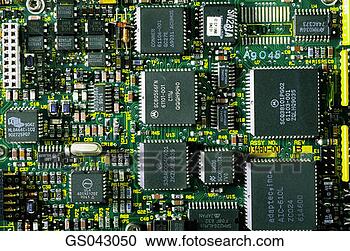
The scrap of printed silk in Linda Lee's hair serves as a representation or symbol for something: but what? Does it symbolize technology, or the urban environment? The pattern is ambiguous. The way in which Case confuses the microcircuit with the layout of a city (the two do look strikingly similar) sets up a blurry boundary between technology and the actual geographic entity of a city. This confusion asks the question: where, in Case's universe, falls the distinction between cyberspace and actual space? Which is the "truer" space?
This is a question which is never fully resolved but is rather extensively explored in the rest of the novel though Gibson's descriptions of Case's experiences within cyberspace and through rhetorical twists like "city of data" (Gibson, 248). In this way, the printed silk is simultaneously a symbolic and a hermeneutic code - symbolizing an enigma.
[HER, SYM]

The scrap of printed silk in Linda Lee's hair serves as a representation or symbol for something: but what? Does it symbolize technology, or the urban environment? The pattern is ambiguous. The way in which Case confuses the microcircuit with the layout of a city (the two do look strikingly similar) sets up a blurry boundary between technology and the actual geographic entity of a city. This confusion asks the question: where, in Case's universe, falls the distinction between cyberspace and actual space? Which is the "truer" space?
This is a question which is never fully resolved but is rather extensively explored in the rest of the novel though Gibson's descriptions of Case's experiences within cyberspace and through rhetorical twists like "city of data" (Gibson, 248). In this way, the printed silk is simultaneously a symbolic and a hermeneutic code - symbolizing an enigma.
Part 6

"Her dark hair was drawn back, held by a band of printed silk -"
[REF]
Here, the combination of references to "dark hair" and "printed silk" bring the racialized portrayal of Linda Lee into full focus. Both phrases are understood by the reader as signifiers of Lee's "Asianness," and the appropriation of Asian cultural elements is one of the aspects that most definitively characterizes the world created by Gibson, as explored in a more limited sense in Part 4. Gibson's use of Orientalism transcends the traditional definition of the term in the sense that he actually writes about Asian characters in an Asian geographic location, rather than just using cultural aspects of Asian culture in his work. However, given that the primary characters are mostly white and his work seems more to use Asian characters as a reinforcement and legitimization of the cultural tokens he weaves into his aesthetic, Orientalism is still a characteristic feature of his work.
[NEXT]
Part 5
"New lines of pain were starting to etch themselves permanently at the corners of her mouth -"
[ACT: 1: etch]
We usually say that wrinkles "appear;" popular anti-aging creams claim to minimize "fine lines." But the lines on Linda Lee's face are "lines of pain" which are not simply appearing out of nowhere - they "etch themselves" onto her face. This action of "etching" evokes scratching, cutting and carving. These actions, far more than "appearing," connote violence and permanence. This description is very much in line with the previous passage - the association of decay and destruction with the beauty and youth that otherwise characterize Linda Lee. They reinforce the disturbing connection between the seemingly oppositional elements, and add to the general tone of grunge and perverted nature that characterize the world of "Neuromancer."
This passage is also resonant with the description of the cafe in which the scene takes place, a cafe in which the "brown laminate of the tabletop was dull with a patina of tiny scratches... [Case] saw the countless random impacts required to create a surface like that... leaving each surface fogged with something that could never be wiped away " (Gibson, 9). Like the surface of the object in the cafe itself, "random impacts" and "attacks" have worked on Linda Lee to leave scratches and lines in her face that "could never be wiped away."
[NEXT]
[ACT: 1: etch]
We usually say that wrinkles "appear;" popular anti-aging creams claim to minimize "fine lines." But the lines on Linda Lee's face are "lines of pain" which are not simply appearing out of nowhere - they "etch themselves" onto her face. This action of "etching" evokes scratching, cutting and carving. These actions, far more than "appearing," connote violence and permanence. This description is very much in line with the previous passage - the association of decay and destruction with the beauty and youth that otherwise characterize Linda Lee. They reinforce the disturbing connection between the seemingly oppositional elements, and add to the general tone of grunge and perverted nature that characterize the world of "Neuromancer."
This passage is also resonant with the description of the cafe in which the scene takes place, a cafe in which the "brown laminate of the tabletop was dull with a patina of tiny scratches... [Case] saw the countless random impacts required to create a surface like that... leaving each surface fogged with something that could never be wiped away " (Gibson, 9). Like the surface of the object in the cafe itself, "random impacts" and "attacks" have worked on Linda Lee to leave scratches and lines in her face that "could never be wiped away."
[NEXT]
Part 4
"The skin below her eyes was pale and unhealthy-looking, but the flesh was still smooth and firm. She was twenty -"
[SEM]

This description simultaneously evokes youth - "smooth," "firm," - and decay - "pale," "unhealthy-looking." While these meanings are usually at odds with each other, Gibson unites the two in the same way that he brings together seemingly disparate aesthetics throughout the rest of the novel - like technology and grime or futuristic elements and orientalism. The very cafe in which the events of this passage are contextualized is decorated in "an uneasy blend of Japanese traditional and pale Milanese plastics" (Gibson, 9). Gibson continually juxtaposes visual semantic codes which come together in an uneasy or unintuitive way as a means to lend his world a simultaneously new and eerily familiar feeling.
[NEXT]
[SEM]

This description simultaneously evokes youth - "smooth," "firm," - and decay - "pale," "unhealthy-looking." While these meanings are usually at odds with each other, Gibson unites the two in the same way that he brings together seemingly disparate aesthetics throughout the rest of the novel - like technology and grime or futuristic elements and orientalism. The very cafe in which the events of this passage are contextualized is decorated in "an uneasy blend of Japanese traditional and pale Milanese plastics" (Gibson, 9). Gibson continually juxtaposes visual semantic codes which come together in an uneasy or unintuitive way as a means to lend his
 world a simultaneously new and eerily familiar feeling.
[NEXT]
Subscribe to:
Posts (Atom)